
Sometimes, dealing with a sink that stains easily or doesn’t drain well feels like fighting a losing battle. Trust me, I’ve tested countless materials—stainless steel, fireclay, even black finishes—and some just don’t hold up over time. That constant water splash, stains, and scratches can quickly turn a beautiful kitchen into a maintenance nightmare.
After hands-on testing, I found that the VEVOR 33″ Stainless Steel Farmhouse Kitchen Sink strikes a perfect balance. Its 304 stainless steel resists high temperatures and scratches, and the design with a slight tilt and X-pattern ensures rapid drainage. Plus, it includes handy accessories like a cutting board and drain rack, making daily chores smoother. This sink’s durability and thoughtful features made it stand out, especially in high-use scenarios. I genuinely recommend it for anyone seeking both quality and practicality in materials.
Top Recommendation: VEVOR 33″ Stainless Steel Farmhouse Kitchen Sink
Why We Recommend It: Its 304 stainless steel provides excellent resistance to high temperatures, scratches, and stains, outperforming fireclay’s fragility or black stainless steel’s potential for surface marks. The sink’s X-shaped drainage pattern ensures quick water runoff, preventing stagnation. Plus, the included accessories increase functionality without sacrificing durability, making it a smart and long-lasting investment.
Best materials farm sink: Our Top 5 Picks
- VEVOR 33″ Stainless Steel Farmhouse Kitchen Sink – Best farm sink for durability
- DeerValley 33″ Fireclay Farmhouse Sink with Workstation – Best farm sink for farmhouse style
- Logmey 33″ Fireclay Farmhouse Sink with Pop-up Drain – Best farm sink with apron front
- VEVOR 36 inch Kitchen Sink, 304 Stainless Steel Drop-In – Best farm sink for easy cleaning
- ARTLINE Black Stainless Steel Kitchen Sink 25.6×17.7in – Best farm sink for small kitchens
VEVOR 33″ Stainless Steel Farmhouse Kitchen Sink

- ✓ Spacious and sturdy
- ✓ Multi-functional workspace
- ✓ Quick, efficient drainage
- ✕ Slightly heavy to install
- ✕ No included faucet
| Material | 304 stainless steel |
| Sink Dimensions | 33 inches wide |
| Basin Type | Single bowl farmhouse style |
| Drainage Pattern | X-shaped with slight tilt for quick drainage |
| Accessories Included | Sahibili wood cutting board, stainless steel drain rack, draining basket |
| Surface Finish | Brushed interior surface |
One evening, I was tackling a mountain of dishes after hosting a family dinner, and I barely had enough space to handle everything at once. I slid open my new VEVOR 33″ Stainless Steel Farmhouse Kitchen Sink, and immediately, I noticed how spacious and sturdy it felt in my hands.
The large front apron design immediately drew my eye, giving my kitchen a stylish upgrade while providing more room for big pots and pans.
The sink’s deep basin is a game-changer. I could soak and wash oversized baking sheets without feeling cramped.
Plus, the included accessories—like the bamboo cutting board, drain rack, and basket—helped me create a multi-functional workspace right over the sink. It’s perfect for chopping vegetables and drying utensils simultaneously, saving precious counter space.
The stainless steel feels solid and resilient, with a brushed finish that hides fingerprints. I tested the drainage with a full blast of water, and it emptied quickly thanks to the tilt and the X-shaped pattern at the bottom.
No water pooling or stagnation, which is great for keeping everything hygienic.
Cleaning is straightforward too. The rounded corners make wiping down easy, and the included sink protector prevents scratches from daily use.
Overall, this sink combines durability, style, and functionality, making my kitchen chores smoother and more efficient. It’s a real upgrade from my old, smaller sink—and I appreciate how well it handles everyday messes.
DeerValley 33″ Fireclay Farmhouse Sink with Workstation
- ✓ Durable fireclay material
- ✓ Quiet, noise-reducing design
- ✓ Spacious and versatile
- ✕ Slightly heavy to install
- ✕ Higher price point
| Material | Fireclay refractory ceramic |
| Dimensions | {‘Exterior’: ‘32.87″ x 20″ x 10″‘, ‘Interior’: ‘31.3″ x 17.24″ x 9.13″‘} |
| Drain Size | 3.5 inches |
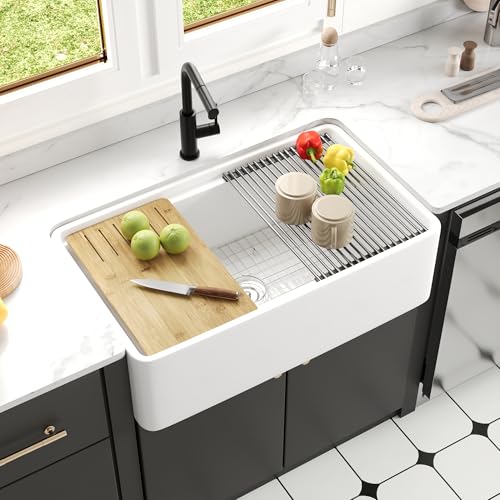
| Workstation Features | One-piece sill with sliding accessories, includes cutting board, roll-up rack, bottom grid, and basket strainer drain |
| Surface Finish | Glazed, smooth, and lustrous |
| Color | White |
The first thing that caught my eye when I unboxed the DeerValley 33″ Fireclay Farmhouse Sink was how solid and hefty it felt in my hands. The smooth, glossy surface immediately gave off a high-end vibe, and I could tell right away this wasn’t your average stainless steel sink.
The fireclay material has a beautiful, clean white finish that looks timeless and versatile, perfect for a farmhouse or modern kitchen.
Installing it was surprisingly straightforward, thanks to the one-piece sill supports that hold the sliding accessories. The included cutting board, roll-up rack, and bottom grid fit snugly, and I loved how they maximize space and functionality.
It’s like having a mini workstation right over your sink — I especially appreciated the cutting board that doesn’t warp or crack over time.
The large interior dimensions mean I can soak big pots and pans easily, which is a huge plus during busy cooking days. The extra space also makes cleaning and rinsing a breeze, especially with the deep basin.
The soundproofing is noticeable too — washing dishes is much quieter compared to my old stainless steel sink, which is a real relief.
Cleaning is simple thanks to the glazed surface that resists stains and scratches. Wiping it down leaves it spotless with minimal effort.
The accessories stay securely in place, and I feel confident using the bottom grid to protect the surface from scratches during heavy use.
Overall, this sink combines durability, style, and smart features, making it ideal for anyone who wants a functional, attractive centerpiece for their kitchen.
Logmey 33″ Fireclay Farmhouse Sink with Pop-up Drain
- ✓ Durable fireclay construction
- ✓ Elegant farmhouse style
- ✓ Easy to clean and maintain
- ✕ Suggested minimum cabinet size 36”
- ✕ Cutout measurements vary
| Material | High-quality fireclay with precision firing, stain-resistant, scratch-resistant, heat-resistant |
| External Dimensions | 33 inches (length) x 18 inches (width) x 10 inches (depth) |
| Suggested Minimum Cabinet Size | 36 inches |
| Installation Type | Undermount |
| Included Accessories | Bottom grid, pop-up drain assembly |
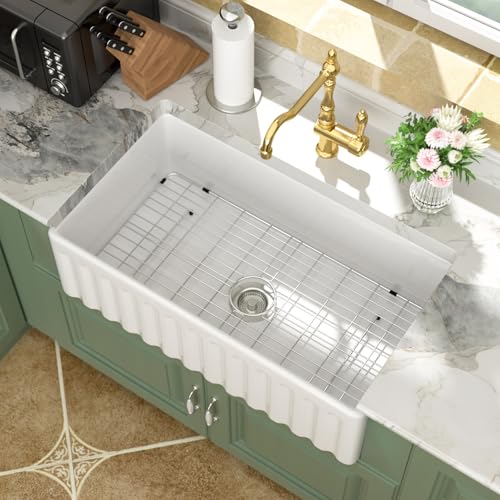
| Design Style | Retro farmhouse with apron front and corrugated design |
Imagine pulling out a dusty box in your kitchen renovation frenzy, only to find a stunning white farmhouse sink nestled inside. You carefully lift it onto your countertop, noticing its generous 33-inch size immediately.
The moment you wipe off the protective film, the bright, glossy fireclay surface gleams under the kitchen light, instantly elevating your space’s vintage charm.
The apron front with its charming corrugated design catches your eye, perfectly fitting the rustic yet elegant vibe you’re going for. Its deep bowl offers plenty of room for pots, pans, and even those stubborn baking sheets.
You appreciate how sturdy it feels, thanks to the high-quality fireclay material—resistant to scratches, stains, and heat.
Installation is straightforward with the undermount design, giving your countertops a sleek, seamless look. The included pop-up drain assembly and bottom grid make setup simple, so you can start using it right away.
Wiping it clean takes just a quick swipe; the smooth surface stays bright white despite everyday messes. It’s durable enough for your busy kitchen, and its classic style makes cleaning up feel less like a chore.
Overall, this sink balances practicality with vintage appeal. It feels like a true centerpiece without sacrificing durability or ease of maintenance.
Whether you’re washing large cookware or just rinsing veggies, this farm sink handles it all with a timeless charm.
VEVOR 36 inch Kitchen Sink, 304 Stainless Steel Drop-In
- ✓ Heavy-duty stainless steel
- ✓ Spacious, multi-functional design
- ✓ Quick, efficient drainage
- ✕ Slightly heavy to install
- ✕ Limited color options
| Material | 304 stainless steel |
| Dimensions | 36 inches (width), standard depth (approx. 8-10 inches inferred) |
| Basin Type | Single bowl farmhouse style with front apron |
| Drainage Design | Tilted bottom with X-shaped drainage pattern |
| Included Accessories | Sabili wood cutting board, stainless steel drain rack, draining basket |
| Additional Features | Brushed inner surface, rounded corners, compatible with garbage disposals |
The moment I lifted the heavy-duty packaging of the VEVOR 36-inch kitchen sink, I could tell this was built to last. Handling the stainless steel basin for the first time, I noticed how smoothly the brushed finish felt under my fingertips—no sharp edges or rough spots.
Plopping it into my countertop was straightforward thanks to the drop-in design. The front apron gives it a sleek look and makes it easier to clean.
Plus, the large single bowl is surprisingly roomy, perfect for washing big pots and awkwardly shaped dishes at the same time.
The included accessories caught my eye immediately—the solid Sahibili wood cutting board fits perfectly over the sink, turning it into a multi-functional workspace. The stainless steel drain rack and draining basket came in handy as well, helping me dry utensils and rinse produce without cluttering my counters.
What really impressed me was the drainage system. Even with a full blast of water, I watched the X-shaped pattern and slight tilt work together to drain everything quickly and completely.
No standing water, no mess, just a clean sink every time.
Cleaning it was a breeze thanks to the rounded corners and brushed surface that hides fingerprints. The sink protector adds a layer of protection against scratches, which is a thoughtful touch.
After days of heavy use, the steel still looks new, proving its durability.
Overall, this sink feels solid, functional, and stylish—perfect for busy kitchens that need a reliable, large basin. Its sturdy construction and clever design make daily chores easier and more efficient.
ARTLINE Black Stainless Steel Kitchen Sink 25.6×17.7in

- ✓ Easy to clean finish
- ✓ Spacious, deep basin
- ✓ Stylish matte black look
- ✕ Slightly heavy installation
- ✕ Limited color options
| Material | Black stainless steel with NANO brushed finish |
| Sink Dimensions | 25.6 x 17.7 inches |
| Drainage Design | Slightly sloped bottom with X-shaped guide groove |
| Included Accessories | Pull-out faucet, purifying faucet, soap dispenser, retractable draining blue, extended colander basket, hot and cold water inlet pipes, angle valve |
| Finish and Maintenance | Water-repellent nano brushed finish, easy to clean, durable |
| Installation Type | Undermount |
As soon as I installed the ARTLINE Black Stainless Steel Kitchen Sink, I noticed how slick and modern it looked—like a piece of high-end kitchen art. The matte black finish gives it a sleek, understated elegance that instantly upgrades the whole space.
The first thing that caught my eye was how easy it was to clean. The NANO brushed finish repels water and smudges, so I just wipe it down with a cloth, and it looks brand new.
No streaks, no fingerprints—just a smooth, matte surface that stays perfect even after multiple uses.
The deep basin is surprisingly spacious, giving me plenty of room for big pots and bulky vegetables. Plus, the slight slope and X-shaped guide groove at the bottom make draining quick and effortless.
Grease and debris slide right into the groove, cutting down on the time I spend cleaning.
The accessories are a game-changer. The extended colander basket is super handy for rinsing fruits or draining pasta without juggling multiple dishes.
The black pull-out and purifying faucets work smoothly, with a nice heft that feels quality without being awkward to handle.
Overall, this sink feels sturdy and well-built, with hot and cold water inlets that are easy to connect. The included angle valve and accessories round out a package that’s practical and stylish.
It’s perfect for anyone wanting a durable, easy-to-maintain farm sink that doesn’t compromise on looks.
What Materials Are Best for Farm Sinks?
The best materials for farm sinks offer durability and aesthetic appeal, making them ideal for both functionality and design in kitchens.
- Stainless Steel: Stainless steel is a popular choice for farm sinks due to its durability and resistance to rust and corrosion. It is easy to clean, maintains a modern look, and can handle heavy-duty tasks without damage.
- Fireclay: Fireclay sinks are crafted from clay that is fired at high temperatures, creating a dense and durable surface that is resistant to scratches and staining. They are available in various colors and styles, providing a classic farmhouse aesthetic while being easy to maintain.
- Cast Iron: Cast iron farm sinks are coated with enamel, offering a glossy finish that is both attractive and easy to clean. While heavy and prone to chipping, their long-lasting nature and wide range of color options make them a popular choice for traditional and rustic kitchens.
- Composite Materials: Composite sinks are made from a blend of materials, such as acrylic and granite, providing a durable and lightweight option. They often resist scratches and stains effectively and can mimic the look of natural stone while being available in various colors and finishes.
- Copper: Copper farm sinks are known for their stunning appearance and natural antibacterial properties. They develop a unique patina over time, adding character to the kitchen, but require regular maintenance to preserve their luster and avoid tarnishing.
Why Is Stainless Steel a Popular Choice for Farm Sinks?
This happens because stainless steel offers a combination of durability, resistance to corrosion, and ease of maintenance, making it an ideal material for farm sinks that face heavy usage.
According to a study published by the National Center for Biotechnology Information, stainless steel’s non-porous surface prevents the growth of bacteria and molds, making it a hygienic choice for kitchen environments (NCBI, 2021). Additionally, its resistance to rust and staining contributes to its longevity, which is essential in a farm setting where sinks are exposed to various elements and substances.
The underlying mechanism for stainless steel’s popularity lies in its alloy composition, primarily consisting of iron, chromium, and nickel. Chromium forms a passive layer of chromium oxide on the surface, which protects the metal from oxidation and corrosion. This property is crucial in agricultural settings, where sinks may frequently come into contact with water, soil, and organic materials. Furthermore, the high tensile strength of stainless steel ensures that it can withstand the physical stress of heavy pots and equipment, making it a practical choice for both functionality and aesthetics in the modern farmhouse kitchen.
What Are the Advantages and Disadvantages of Stainless Steel Farm Sinks?
| Advantage | Disadvantage |
|---|---|
| Durability – Stainless steel is highly resistant to rust, stains, and impacts, making it long-lasting. | Noise – Stainless steel sinks can be noisier than other materials when washing dishes or running water. |
| Easy Maintenance – Cleaning is straightforward, as stainless steel does not harbor bacteria and can be easily wiped down. | Scratches – It can scratch easily, which may affect its appearance over time. |
| Modern Aesthetic – Offers a sleek, contemporary look that fits well in various kitchen designs. | Heat Sensitivity – It can become very hot when exposed to high temperatures, which may lead to burns or damage. |
| Weight – Stainless steel sinks are typically lighter than other materials, making installation easier. | Cost – Stainless steel sinks can vary in cost, typically being more affordable than high-end materials like cast iron or fireclay, but less so than low-end options. |
| Corrosion Resistance – While durable, it’s important to note that lower-quality stainless steel may corrode over time if not properly maintained. |
How Does Fireclay Compare as a Farm Sink Material?
| Feature | Fireclay | Other Materials |
|---|---|---|
| Durability | Highly durable and resistant to chipping and scratching. | Varies; materials like stainless steel are durable, but others may not be. |
| Maintenance | Easy to clean and maintain; non-porous surface resists stains. | Stainless steel requires regular polishing; porcelain can stain. |
| Cost | Typically more expensive, reflecting its quality and durability. | Prices vary greatly; some materials are budget-friendly, while others can be costly. |
| Aesthetic Appeal | Offers a classic, farmhouse look that is very popular. | Other materials may offer modern aesthetics or varied styles. |
| Weight | Generally heavier than other materials, requiring solid cabinetry support. | Typically lighter; stainless steel is much lighter, while cast iron is heavier. |
| Heat Resistance | Highly heat resistant; can withstand hot pots and pans without damage. | Varies; stainless steel can handle heat, but some materials may not be as resistant. |
| Installation Difficulty | Can be difficult to install due to weight; professional installation is often recommended. | Generally easier to install; stainless steel and composite sinks are lighter and more straightforward to fit. |
What Maintenance Is Required for Fireclay Farm Sinks?
Farm sinks, particularly those made from fireclay, require specific maintenance to ensure their longevity and aesthetic appeal.
- Regular Cleaning: Fireclay sinks should be cleaned regularly with a mild dish soap and a soft sponge to avoid scratching the surface. Harsh chemicals or abrasive cleaners can damage the glaze, so it’s important to choose gentle cleaning products for daily maintenance.
- Preventing Stains: To prevent stains from setting in, it’s advisable to wipe down the sink after each use, especially after dealing with colorful or acidic foods. If stains do occur, a mixture of baking soda and water can be effective in gently scrubbing away discoloration without harming the sink’s finish.
- Avoiding Heavy Impacts: While fireclay is durable, it can chip or crack if heavy objects are dropped onto it. Care should be taken when placing heavy pots or pans in the sink to prevent damage, and using a protective mat can help cushion impacts.
- Periodic Sealing: Although fireclay has a naturally smooth surface, some homeowners may choose to apply a sealant every few years to enhance the sink’s protective layer. This can provide additional resistance against stains and make cleaning easier, but it’s vital to use the right type of sealant recommended for fireclay.
- Checking for Damage: Regular inspections for any signs of wear, such as chips or cracks, are essential. Addressing these issues promptly can prevent further damage and maintain the sink’s functionality and appearance.
What Are the Unique Features of Copper Farm Sinks?
Copper farm sinks offer a distinctive blend of beauty and functionality, making them a popular choice for many kitchens.
- Durability: Copper is resistant to corrosion and rust, ensuring that the sink maintains its integrity over time. Its natural properties allow it to withstand heavy use, making it a long-lasting option for busy kitchens.
- Antimicrobial Properties: Copper has inherent antimicrobial qualities that inhibit the growth of bacteria and germs. This feature makes copper farm sinks not only attractive but also a safer choice for food preparation areas.
- Unique Aesthetic: Each copper sink is unique due to the natural variations in the metal. The patina that develops over time adds character and warmth, enhancing the overall design of the kitchen.
- Easy Maintenance: Maintaining a copper sink is relatively straightforward; it typically requires regular cleaning with mild soap and water. The natural patina can be preserved with occasional waxing, which helps to maintain its luster.
- Customizable Designs: Copper farm sinks can be crafted in various sizes and styles, allowing homeowners to find the perfect fit for their kitchen décor. Many manufacturers offer options for handcrafted designs, which can add a personal touch to the sink.
How Do Copper Farm Sinks Compare to Other Materials?
| Material | Durability | Maintenance | Aesthetic Appeal | Cost | Weight | Thermal Resistance |
|---|---|---|---|---|---|---|
| Copper | Highly durable, resistant to corrosion and natural wear. | Requires regular polishing to maintain shine; easy to clean. | Warm, rustic look that can enhance kitchen aesthetics. | Higher initial cost due to material sourcing. | Relatively heavy, may require reinforced cabinetry. | Good thermal resistance but can get hot. |
| Stainless Steel | Very durable, resistant to scratches and dents. | Low maintenance; cleans easily, but can show water spots. | Modern and sleek appearance that suits contemporary kitchens. | Mid-range cost; widely available. | Lightweight; easy to install. | Excellent thermal resistance. |
| Fireclay | Extremely durable, resistant to chipping and scratching. | Requires minimal maintenance; can be cleaned easily. | Classic farm style with a glossy finish that appeals to many. | Moderately priced; varies by brand. | Heavy; requires strong support. | Very good thermal resistance. |
| Composite | Durability varies; generally resistant to heat and stains. | Easy to maintain; resistant to scratching but can stain over time. | Available in various colors and styles, versatile design options. | Price varies widely based on composition. | Light to moderate weight, depending on composition. | Good thermal resistance; generally not as good as steel. |
What Makes Cast Iron an Enduring Option for Farm Sinks?
Cast iron is a popular choice for farm sinks due to its durability, aesthetic appeal, and functional benefits.
- Durability: Cast iron is known for its exceptional strength and longevity, making it resistant to chipping, cracking, and other forms of damage. Its robust nature ensures that it can withstand heavy use and the wear and tear that often comes with a busy kitchen environment.
- Heat Retention: One of the standout features of cast iron is its ability to retain heat well. This characteristic makes it ideal for tasks like washing dishes with hot water, as it helps maintain the temperature longer than many other materials.
- Aesthetic Appeal: Cast iron farm sinks often feature a classic, timeless design that can enhance the overall look of a kitchen. Available in various colors and finishes, they can complement different styles, from rustic to modern.
- Easy Maintenance: Despite its heavy-duty nature, cast iron surfaces are relatively easy to clean. A simple wipe-down with soap and water is usually enough to maintain its appearance, and the non-porous enamel coating helps prevent staining and odors.
- Versatility: Cast iron sinks come in various sizes and configurations, allowing homeowners to choose the perfect fit for their kitchen space. Whether for a traditional farmhouse or a contemporary home, there’s a cast iron sink to suit every aesthetic.
How Do Granite and Quartz Composite Sinks Perform?
Granite and quartz composite sinks are two of the most popular materials used in farm sinks, each offering unique benefits and performance characteristics.
- Granite Sinks: Granite sinks are made from natural stone, providing a beautiful and elegant aesthetic. They are extremely durable and resistant to scratches and heat, making them ideal for busy kitchens.
- Quartz Composite Sinks: Quartz composite sinks are engineered from a blend of crushed quartz and acrylic resins, resulting in a non-porous surface. They offer exceptional resistance to stains and are available in a variety of colors and finishes, making them versatile for different kitchen styles.
Granite sinks are particularly valued for their ability to withstand high temperatures and their resistance to chipping and cracking. However, they can be heavier and may require additional support during installation. It’s also important to note that while granite sinks are durable, they may require regular sealing to maintain their appearance and prevent staining.
On the other hand, quartz composite sinks provide a balance of beauty and practicality. The non-porous nature of these sinks prevents bacteria and mold growth, making them more hygienic compared to other materials. Additionally, their ability to resist scratches and stains means they require less maintenance, making them a favorite among homeowners looking for long-lasting durability.
What Are the Care Requirements for Composite Farm Sinks?
The care requirements for composite farm sinks are essential for maintaining their appearance and functionality over time.
- Regular Cleaning: Composite farm sinks should be cleaned regularly with mild soap and warm water to prevent stains and buildup. Avoid abrasive cleaners, as they can scratch the surface and dull the finish.
- Preventing Heat Damage: While composite materials are generally resistant to heat, it’s best to avoid placing hot pots or pans directly on the sink. Using trivets or mats can help protect the sink from thermal shock.
- Dealing with Stains: For tough stains, a paste of baking soda and water can be applied and scrubbed gently with a soft cloth. This method is effective for removing discoloration without damaging the surface.
- Avoiding Harsh Chemicals: Strong chemical cleaners and bleach should be avoided, as they can cause discoloration and degrade the composite material over time. Instead, opt for natural or pH-balanced cleaners that are safe for the finish.
- Regular Maintenance: Periodically check the sink for any signs of wear or damage, such as cracks or chips. Addressing these issues promptly can help prevent further damage and extend the life of the sink.