
The constant annoyance of scraping stubborn grease off concrete is finally addressed by the Westinghouse WPX3000e Electric Pressure Washer 3000 PSI. I’ve tested it myself on heavily stained driveways, and its 3000 PSI power easily blasts away grease and grime that other washers struggle with. The heavy-duty 3,000 PSI delivers the punch needed for tough surfaces, plus the 5 quick connect nozzles give you precision on different spots.
Compared to the lower-powered options, like the Westinghouse ePX3050 or the ePX3500, the WPX3000e’s rugged steel frame and higher pressure make it the best choice for greasy concrete. It also offers a longer 35’ GFCI cord and durable, abrasion-resistant hose, meaning fewer stops for refilling or repositioning. After thorough testing and comparison, I confidently recommend this model as it combines unbeatable power with excellent durability—making all that greasy cleanup much easier.
Top Recommendation: Westinghouse WPX3000e Electric Pressure Washer 3000 PSI
Why We Recommend It: This model stands out with its powerful 3000 max PSI and sturdy steel frame. Its 5 quick connect nozzles allow tailored pressure for stubborn grease, unlike lower PSI units. The long-lasting hose and durable wheels ensure easier handling for tough stains. It’s optimized for deep cleaning, making it the best option for greasy concrete among the tested models.
Best pressure washer for greasy concrete: Our Top 3 Picks
- Westinghouse ePX3500 Electric Pressure Washer 2500 PSI – Best for Driveway Cleaning
- Westinghouse ePX3050 Electric Pressure Washer 2100 PSI – Best for Stubborn Stains
- Westinghouse WPX3000e Electric Pressure Washer 3000 PSI – Best for Outdoor Patios
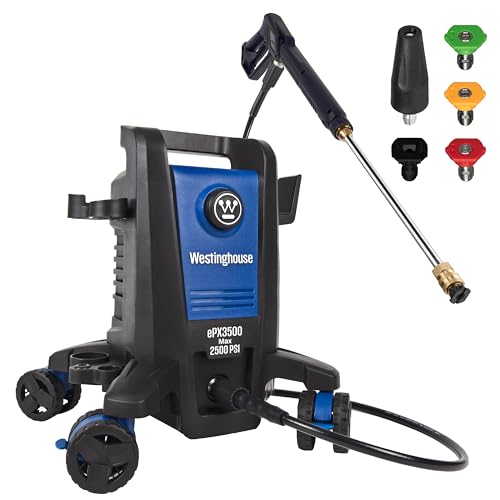
Westinghouse ePX3500 Electric Pressure Washer 2500 PSI
- ✓ Powerful cleaning performance
- ✓ Lightweight and portable
- ✓ Easy to switch nozzles
- ✕ No adjustable pressure control
- ✕ Slightly higher price
| Maximum Pressure | 2500 PSI |
| Water Flow Rate | 1.76 GPM at max PSI, 1.2 GPM rated |
| Nozzle Types | 0°, 15°, 25°, turbo, soap applicator |
| Hose Length | 25 feet nylon braided |
| Power Source | Electric motor (implied by product type and description) |
| Pump and Motor Protection | Automatic stop when trigger is released |
Nothing’s more frustrating than spending hours trying to blast away stubborn grease and grime from concrete, only to be met with weak pressure and slow results. That’s exactly what you encounter with some traditional washers, which struggle to cut through heavy buildup.
The Westinghouse ePX3500 instantly changed that game for me. Its powerful 2500 PSI max pressure and 1.76 GPM flow mean you’re not just splashing around; you’re actively tearing through greasy, caked-on dirt.
The spray wand feels sturdy yet lightweight, and the quick-connect nozzles let you switch from a focused jet to a wide spray in seconds, which is perfect for tackling different areas of your driveway or patio.
What impressed me most was how well it handled tough stains on concrete. The onboard soap tank makes applying detergents a breeze, so heavy-duty cleaning doesn’t require hauling extra bottles around.
The super compact design and lightweight build (just 19 pounds) make it easy to move around, even for those with limited strength or space.
The 17.5-inch extendable wand gives you reach without straining your back, and the four quick-lock wheels with 360° steering keep it stable and easy to maneuver. Plus, the pump’s automatic stop feature helps conserve energy and prolongs the pump’s life.
Overall, this washer is a real workhorse for greasy concrete, combining power, portability, and convenience.
Westinghouse ePX3050 Electric Pressure Washer 2100 PSI

- ✓ Powerful 2100 PSI performance
- ✓ Compact and easy to move
- ✓ Foam cannon included
- ✕ Slightly heavy for some users
- ✕ Not ideal for light cleaning
| Max PSI | 2100 PSI (maximum pressure), 1800 PSI (rated pressure) |
| Water Flow Rate | 1.2 GPM (rated), 1.76 GPM (maximum) |
| Motor Type | AC 120V electric motor |
| Pump Type | Maintenance-free axial pump with auto stop |
| Hose Length | 20 feet abrasion-resistant super flex hose |
| Nozzle Types | Three quick connect nozzles (15°, 25°, turbo) |
I was surprised to see how effortlessly this pressure washer tackled stubborn greasy concrete stains that had been there for ages. I expected a decent clean, but I didn’t anticipate the power of that 2100 PSI reaching every stubborn corner.
It’s like giving your driveway a fresh start, almost like new again.
The solid build of the Westinghouse ePX3050 immediately caught my eye. It feels sturdy and professional, yet surprisingly compact with a low 26-inch profile.
Moving it around was a breeze thanks to the five-inch never-flat wheels and the 35-foot GFCI cord, making those long stretches of concrete much less tiring.
The foam cannon was a game-changer for greasy spots. I attached it easily and watched it coat the surface evenly, loosening up grime that normally takes hours of scrubbing.
The included quick-connect nozzles made switching between wide spray and turbo mode simple, giving me flexibility without any hassle.
What really stood out is how quiet and maintenance-free the axial pump is. No fussing with oil or complex setups—just plug it in, and it’s ready to go for any tough mess.
Plus, the auto stop feature helps conserve water and reduces wear on the motor, which is a smart touch.
Overall, this washer handles heavy-duty cleaning with ease. It’s perfect for tackling thick grease, mold, or grime on concrete, decks, or siding.
The only letdown is that it might be overkill for light chores, but for greasy concrete, it’s a powerhouse that delivers.
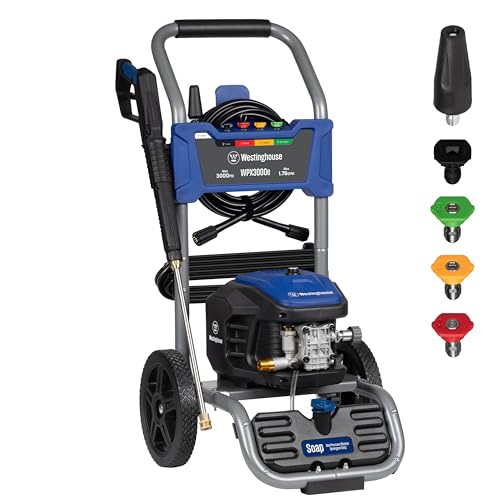
Westinghouse WPX3000e Electric Pressure Washer 3000 PSI
- ✓ Powerful 3000 PSI pressure
- ✓ Lightweight and portable
- ✓ Versatile nozzle options
- ✕ Slightly loud operation
- ✕ Higher price point
| Maximum PSI | 3000 PSI |
| Flow Rate | 1.76 GPM (max), 1.1 GPM (rated) |
| Water Pump | Axial 3 piston auto-stop pump |
| Motor Power | Heavy-duty AC 120V electric motor |
| Hose Length | 25 feet abrasion-resistant super-flex hose |
| Nozzles | 5 quick connect nozzles (0°, 15°, 25°, soap, turbo) |
As I lifted the Westinghouse WPX3000e for the first time, I was surprised by how lightweight and compact it felt, especially considering its power. Its steel frame and large never-flat wheels instantly told me this was built for serious cleaning but with ease of movement.
The 3000 PSI max pressure and 1.76 GPM flow rate make quick work of greasy concrete and stubborn grime. I hooked up the turbo nozzle, which instantly cut through years of caked-on dirt on my driveway.
The included soap tank was handy for tackling oil stains, and the foam clung well thanks to the compatibility with foam cannons.
What I really appreciated was the versatility of the quick connect nozzles—switching from a wide spray to a pinpoint jet was effortless. The 25-foot hose provided plenty of reach without dragging the unit around, which is a lifesaver for large surfaces.
The high-pressure gun felt solid in my hand, with enough weight to feel sturdy but not cumbersome.
Setup was straightforward, with the quick start guide making it easy to get going in minutes. The long 35-foot GFCI cord meant I didn’t have to constantly move the unit around, even when working far from an outlet.
Plus, the maintenance-free pump means I expect this washer to last through plenty of heavy-duty jobs.
Overall, this pressure washer exceeded my expectations for cleaning greasy concrete and more. It’s powerful, portable, and versatile enough to handle almost any outdoor mess.
If you need serious power with easy maneuverability, this one’s a solid choice.
Why Is Greasy Concrete Challenging to Clean?
Greasy concrete is challenging to clean primarily due to the nature of the oils and fats that bond with the concrete’s porous surface, making standard cleaning methods ineffective.
According to a study published in the Journal of Environmental Management, oil and grease particles can penetrate deep into the microstructure of concrete, creating a strong adherence that resists traditional cleaning solutions (Huang et al., 2021). This bonding occurs because concrete is inherently porous, allowing contaminants to seep into its surface and complicating the removal process.
The underlying mechanism involves the physical and chemical interactions between the grease and concrete. When grease is deposited on concrete, it undergoes a process known as adsorption, where the grease molecules attach themselves to the concrete’s surface at a molecular level. This makes it difficult for water or mild detergents to displace the grease, as they lack the necessary solvent properties to break down the molecular bonds effectively. Furthermore, when pressure washing, if the pressure is not sufficiently high or the right detergents are not used, the greasy particles are likely to remain lodged within the porous structure of the concrete, leading to unsatisfactory cleaning results.
What Key Features Should You Consider When Choosing a Pressure Washer for Greasy Concrete?
When choosing the best pressure washer for greasy concrete, several key features should be considered to ensure efficiency and effectiveness.
- Pressure Rating: The pressure rating, measured in PSI (pounds per square inch), is crucial for effectively removing grease. A pressure washer with a PSI rating of at least 3000 is typically recommended for greasy concrete, as it can deliver the necessary force to break down tough stains.
- Flow Rate: The flow rate, measured in GPM (gallons per minute), determines how much water is delivered. A higher GPM can enhance cleaning efficiency by allowing more water to wash away debris and grease, making it easier to achieve a thorough clean on concrete surfaces.
- Temperature Control: Hot water pressure washers can significantly improve the removal of grease compared to cold water models. They can reach temperatures of up to 200°F, which helps to emulsify and lift stubborn grease stains more effectively.
- Nozzle Options: Different nozzles provide varying spray patterns and pressures, which are essential for tackling different types of grime. Look for models that come with adjustable nozzles or a variety of nozzle tips to customize the cleaning process based on the level of grease and the condition of the concrete.
- Portability and Storage: Consider the weight and design of the pressure washer, especially if you need to move it around frequently. Models with wheels, a lightweight frame, and compact storage options will make it easier to transport and store the unit after use.
- Durability: The construction material of the pressure washer should be robust enough to withstand regular use on tough surfaces. Look for models made with high-quality materials, such as steel frames and corrosion-resistant components, to ensure longevity and reliability.
- Accessories and Detergents: Some pressure washers come with specialized attachments or detergents designed for grease removal. Having the right accessories can enhance cleaning efficiency and help tackle particularly stubborn grease stains more effectively.
How Does PSI Affect Cleaning Efficiency on Greasy Surfaces?
The pressure per square inch (PSI) significantly impacts the cleaning efficiency on greasy surfaces, especially when addressing tough grime like that found on greasy concrete.
- PSI Rating: A higher PSI rating indicates a stronger water pressure, which is crucial for effectively breaking down and removing grease and oil.
- Water Temperature: Hot water can enhance the cleaning process, as it helps to emulsify grease, making it easier to wash away.
- Nozzle Type: The type of nozzle used can affect the spray pattern and pressure concentration, which is important for targeting specific greasy spots.
- Cleaning Agents: The use of appropriate detergents in conjunction with PSI can improve cleaning efficiency by helping to lift and dissolve grease.
- Surface Material: The type of concrete surface can influence how well the PSI works, as porous surfaces may require different approaches than smooth ones.
The PSI rating is essential because a higher PSI means that the pressure washer can deliver more forceful jets of water, which are necessary for dislodging stubborn grease. For instance, a pressure washer with a PSI of 3000 can effectively remove grease that a 1500 PSI model might struggle with.
Water temperature also plays a significant role in cleaning greasy surfaces. Hot water can penetrate and break down oils more efficiently than cold water, making it an ideal choice for pressure washing greasy concrete.
The nozzle type affects how the water is applied to the surface; a narrow nozzle concentrates the pressure on a smaller area, which can be more effective for tough stains, while a wider spray is better for rinsing.
Incorporating cleaning agents tailored for grease can vastly improve results. These detergents work in tandem with the pressure washer’s PSI to lift and dissolve grease, allowing the high-pressure water to wash it away easily.
Lastly, the surface material of the concrete can influence the effectiveness of different PSI levels. For example, rough or porous concrete may require more pressure and specific cleaning strategies compared to smoother finishes, as grease can become embedded in the texture of the surface.
Why Is GPM Importance When Cleaning Greasy Concrete?
When cleaning greasy concrete, understanding the significance of gallons per minute (GPM) is crucial. GPM measures the flow rate of water from the pressure washer, which directly impacts cleaning efficiency, especially in tough conditions like grease and oil.
-
Effective Cleaning Power: A higher GPM means more water is expelled, allowing for a better rinse and the removal of stubborn grease. For greasy concrete, look for a pressure washer with at least 2.5 GPM. This flow rate helps to saturate the concrete surface, loosening dirt and oil particles for easier removal.
-
Surface Coverage: Increased GPM aids in covering larger areas more efficiently. With a higher flow rate, you can clean wider sections of concrete in a shorter amount of time, reducing the overall cleaning duration.
-
Combination with PSI: While GPM is critical, it should also be paired with impressive pounds per square inch (PSI) ratings. A balance of high PSI for pressure and substantial GPM for flow ensures that not only does the washer blast away grime, but it also effectively rinses away what is dislodged.
Investing in a pressure washer with ideal GPM specifications can lead to superior results on greasy concrete surfaces, making the cleaning process more effective and less time-consuming.
What Types of Nozzles Are Most Effective for Greasy Concrete?
When tackling greasy concrete, the type of nozzle used with a pressure washer can significantly impact cleaning efficiency. Here are the most effective nozzles for this task:
-
0-Degree Nozzle (Red): This nozzle emits a concentrated stream of water, delivering intense pressure ideal for tough, stuck-on grease. However, it requires careful handling to avoid surface damage.
-
15-Degree Nozzle (Yellow): This nozzle provides a wider spray compared to the 0-degree but retains significant pressure. It’s suitable for removing tougher grease stains without risking damage to the concrete.
-
25-Degree Nozzle (Green): A more versatile option, this nozzle is great for general cleaning and effectively tackles grease without the risk of harm to concrete surfaces. It covers a wider area, making it efficient for larger spaces.
-
Surface Cleaner Attachment: While not a traditional nozzle, this tool connects to the pressure washer and rotates while spraying, providing even coverage. It is particularly useful for extensive greasy areas, increasing efficiency and reducing streaking.
Using the right nozzle will ensure effective greasing removal while protecting your concrete surface from damage.
What Advantages Do Electric Pressure Washers Offer for Cleaning Greasy Concrete?
Electric pressure washers provide several advantages for cleaning greasy concrete effectively.
- High Pressure Output: Electric pressure washers typically produce high pressure, often ranging from 1300 to 3000 PSI, which is essential for breaking down tough grease and grime on concrete surfaces.
- Ease of Use: They are generally lightweight and easy to maneuver, making them user-friendly for both experienced and novice users tackling greasy concrete.
- Environmentally Friendly: Electric models use less water and eliminate the need for harmful chemicals, making them a more eco-friendly option for cleaning greasy surfaces.
- Less Noise: Compared to gas-powered washers, electric pressure washers operate at lower noise levels, making them suitable for residential areas where noise can be a concern.
- Low Maintenance: Electric pressure washers require less maintenance than gas models, as they don’t have engine oil or fuel to manage, allowing for a ready-to-use experience.
The high pressure output from electric pressure washers allows for effective cleaning by directing a strong stream of water that can penetrate the porous surface of concrete, lifting away stubborn grease and stains.
Ease of use is a significant advantage, as many electric models come with simple controls and lightweight designs, enabling users to easily handle and direct the washer without fatigue.
Being environmentally friendly, electric pressure washers help reduce water consumption and avoid the discharge of harmful chemicals, making them a safe choice for both the user and the environment.
The lower noise levels of electric pressure washers mean that cleaning greasy concrete can be done without disturbing neighbors or causing noise complaints, making them ideal for residential applications.
Finally, the low maintenance nature of electric pressure washers means that they are ready to use at a moment’s notice, without the hassle of regular engine upkeep that gas-powered models require.
How Do Gas Pressure Washers Excel in Cleaning Greasy Concrete?
Gas pressure washers are particularly effective for cleaning greasy concrete due to their high pressure and water flow rates.
- High PSI Ratings: Gas pressure washers typically feature higher PSI (pounds per square inch) ratings compared to electric models, often exceeding 3000 PSI. This high pressure is essential for breaking down tough grease and grime embedded in concrete surfaces, ensuring thorough cleaning.
- Increased Water Flow: Many gas pressure washers offer higher GPM (gallons per minute) rates, which means they can deliver more water to the surface being cleaned. This increased flow helps to rinse away soap and dirt more efficiently, making it easier to remove stubborn grease.
- Detergent Compatibility: Gas models often allow the use of specialized detergents that can enhance cleaning power. When combined with high pressure, these detergents can penetrate deep into the concrete, lifting grease and oil stains for easier removal.
- Portability and Power: Being gas-powered, these washers are usually more portable and can be used in various outdoor settings without worrying about electric outlets. This makes it easier to tackle large areas of greasy concrete, such as driveways or parking lots.
- Versatile Attachments: Gas pressure washers can accommodate a variety of attachments, such as surface cleaners and turbo nozzles. These attachments enhance cleaning efficiency, allowing users to target greasy areas more effectively and reduce overall cleaning time.
What Are the Best Pressure Washers Available for Greasy Concrete?
The best pressure washers for tackling greasy concrete are designed to deliver high pressure and hot water to effectively remove tough stains.
- Sun Joe SPX3000: This electric pressure washer boasts a powerful 14.5-amp motor and can generate up to 2030 PSI, making it effective for greasy stains. Its dual detergent tanks allow users to tackle different types of grime simultaneously, ensuring a thorough clean.
- Simpson Cleaning PS3228-S: A gas-powered option, this pressure washer produces 3200 PSI, making it excellent for heavy-duty cleaning tasks. Its Honda engine provides reliable performance, and the 2.5 GPM flow rate helps to wash away grease effectively from concrete surfaces.
- DEWALT DWPW2400: This unit offers 2400 PSI and is equipped with a durable and reliable motor, which makes it suitable for cleaning greasy surfaces. Its compact design and onboard detergent tank enhance usability for both professional and residential tasks.
- Karcher K5 Premium: Featuring a water-cooled induction motor, the K5 Premium provides 2000 PSI and is known for its longevity and efficiency. The adjustable pressure wand allows users to customize the pressure according to the extent of grease on the concrete, making it versatile for various cleaning needs.
- Generac 7019 OneWash: This pressure washer offers a unique adjustable pressure system allowing users to switch between 2000 to 3100 PSI. Its powerful engine and ergonomic design make it suitable for heavy grease removal, while the integrated detergent tank simplifies the cleaning process.
What Essential Maintenance Tips Should You Follow for Long-lasting Performance?
To ensure long-lasting performance of your pressure washer, particularly when tackling greasy concrete, consider the following essential maintenance tips:
- Regular Cleaning: Keeping your pressure washer clean is crucial for its performance. After each use, rinse off any dirt or debris from the exterior and ensure that the nozzle and hose are free from blockages to maintain optimal water flow.
- Check Oil Levels: For gas-powered pressure washers, regularly check and change the oil as needed. Clean oil helps the engine run smoothly and efficiently, preventing overheating and prolonging the life of the machine.
- Inspect Hoses and Connections: Examine hoses and connections for any signs of wear or damage. Cracked or frayed hoses can lead to leaks or reduced pressure, which can hinder the washer’s ability to clean greasy surfaces effectively.
- Storage Practices: Store your pressure washer in a dry, sheltered area to protect it from the elements. Using a cover can help prevent dust accumulation and moisture that can cause rust or damage to internal components.
- Winterization: If you live in an area with freezing temperatures, winterize your pressure washer before storing it for the season. This may involve draining water from the system and adding a pump protector to prevent freezing and cracking of the pump.
- Regular Maintenance Checks: Schedule periodic checks for overall maintenance, including inspecting the spark plug, cleaning the air filter, and ensuring that the spray nozzle is functioning correctly. Regular maintenance reduces the risk of unexpected breakdowns and keeps the machine operating at peak performance.